Zammler Kazakhstan’s network of drop-off points includes more than 50 locations across Kazakhstan. At this scale, maintaining service quality at every location becomes a separate operational challenge. Queues are one of the key indicators of a service disruption: they directly affect customer loyalty and the overall reputation of the service.
The analysis showed that in 80% of cases, queues occur not because of insufficient staffing, but due to disruptions in internal processes or improper resource allocation within the location. In other words, this is a management issue rather than a staffing issue.
The Situation Before Implementation
Before the detection system was introduced, Zammler Kazakhstan learned about queues exclusively through customer complaints. This created a fundamental limitation: by the time a complaint was received, the situation had already occurred, the customer was already dissatisfied, and the opportunity to intervene promptly had been missed.
With a network of more than 50 locations, this approach is not scalable. A manager cannot physically monitor what is happening at every location in real time and was forced to react after the fact rather than proactively.
How the System Works
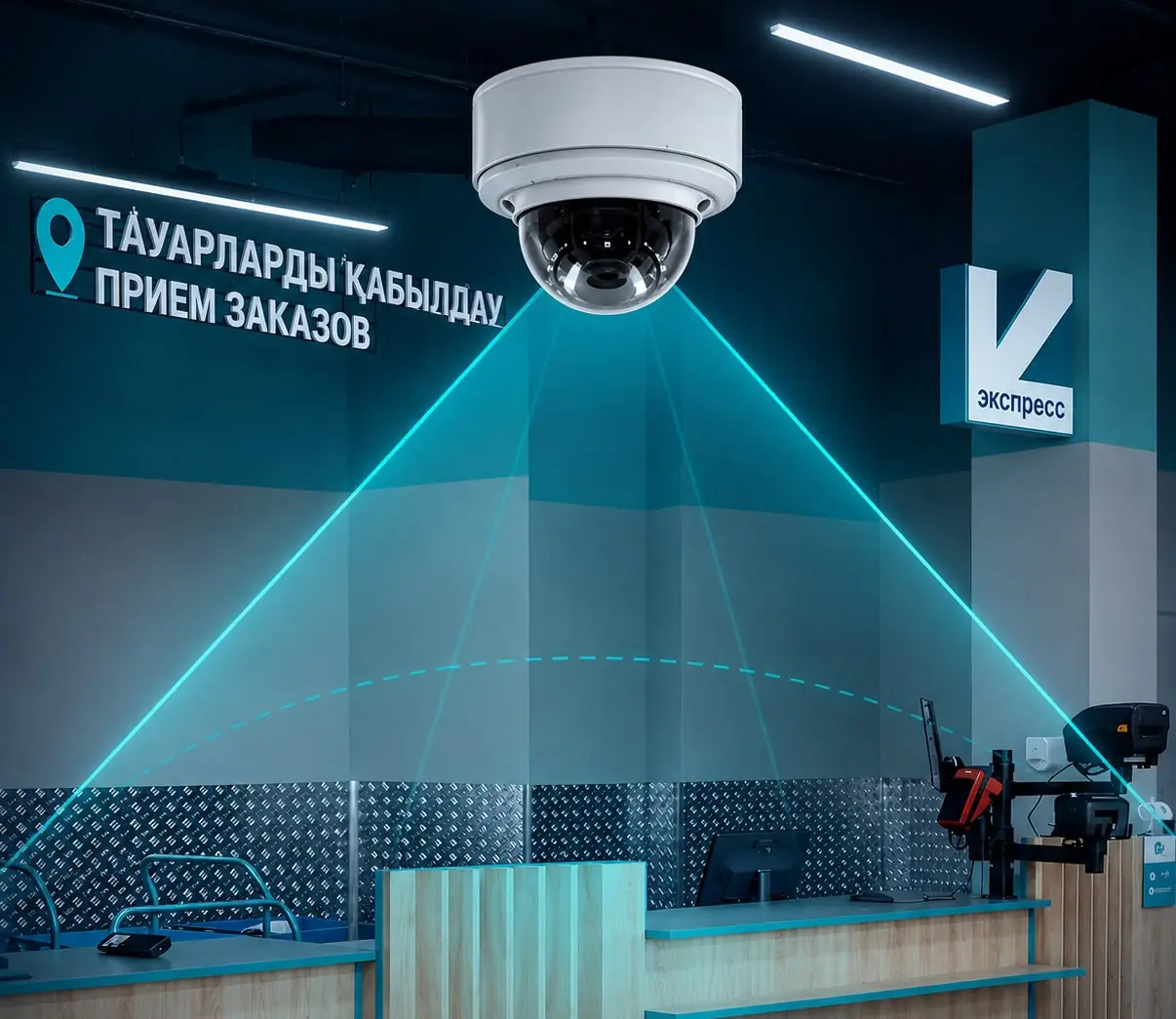
The queue detection system is a video analytics module integrated with the existing CCTV cameras. No additional hardware was required at the drop-off points — this is one of the key advantages of the solution from an implementation perspective.
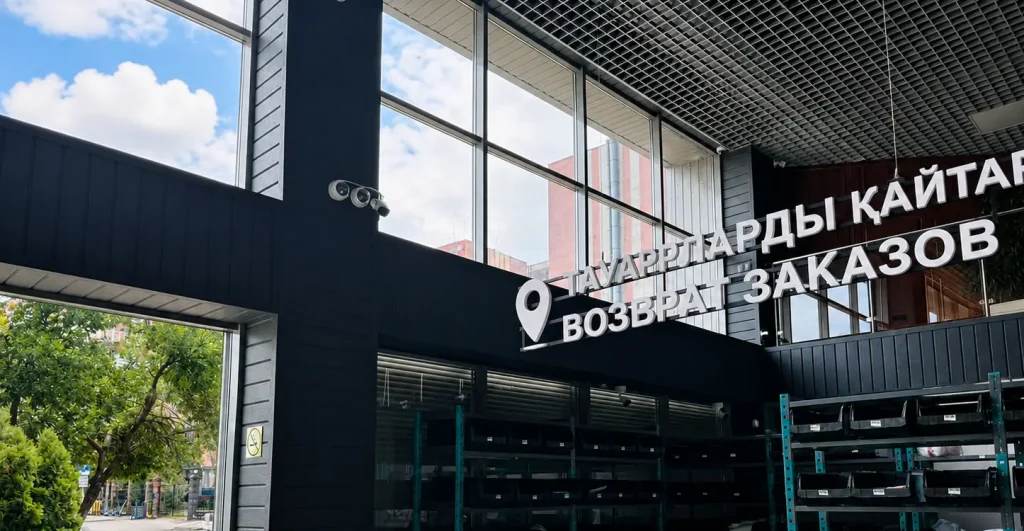
Queue Detection System at a Drop-Off Point
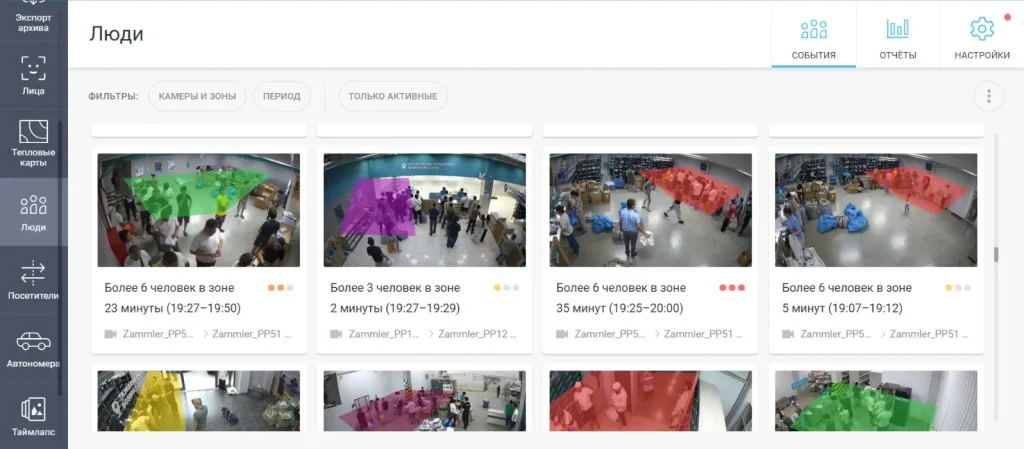
Interface
The system operates in five steps. The camera monitors the service area — the reception window and the surrounding space. The video stream is transmitted to a cloud service, where the analytics module processes it. The neural network detects people in the frame, counting them by head. If the number of people in the designated area exceeds the set threshold, the system records a “queue” event. An automatic notification is then sent: the manager receives an alert via email and a Telegram channel and can take immediate action.
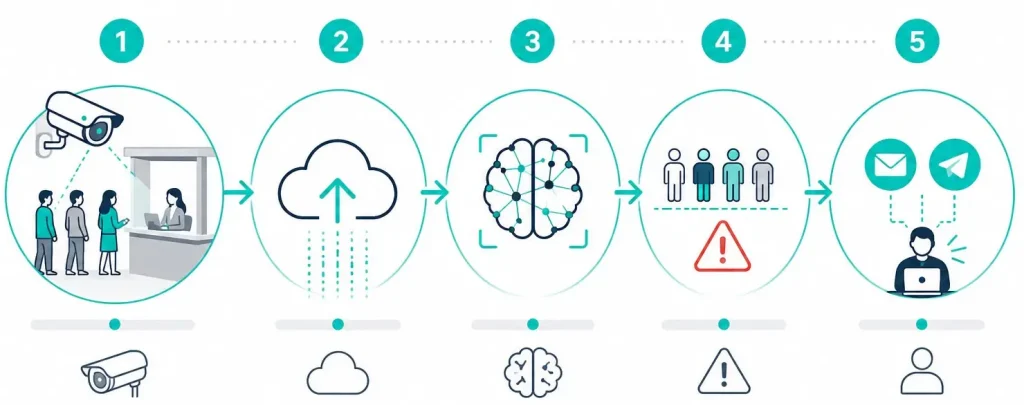
The entire process, from the moment a queue forms to the notification being received, takes just seconds. Customers are not aware of the system: it is fully internal, with no visible presence in the service area.
After receiving the alert, the manager reallocates employees between areas of responsibility and opens additional reception windows. This is a targeted intervention — not a planned increase in staffing, but an operational response to a specific situation at a specific location.
Measurable Impact
Since the system was introduced, the number of recorded queue incidents has decreased by 20 cases per month. This is not just an operational metric — every eliminated queue means a customer received service without waiting or frustration.
An additional benefit is strategic. The data generated by the detection system enabled Zammler Kazakhstan to identify the need for SST terminals: the analytics showed where and when the workload consistently exceeded operator capacity, providing a basis for the next technological step.
Key Results:
- 20 fewer queue incidents recorded per month;
- real-time response to queue formation;
- implementation without modifying the equipment at the drop-off points.
Why Not More Staff or Space?
Increasing the workforce is a last resort when business processes are managed efficiently. In a world where technology is developing faster than operating budgets are growing, expanding the workforce to accommodate every peak scenario is economically inefficient.
The detection system provides a different answer: not more people, but better management of the resources already available. The alert comes at the moment when there is still time to intervene — reallocate staff, open an additional service window, or reorganize the flow. This is what effective management looks like at scale across the network.
Queues are not just an inconvenience. They directly affect customer loyalty: a customer who has had to wait in line is less likely to return and more likely to leave a negative review. The detection system shifts this risk management from a reactive to a proactive approach.
With a network of more than 50 locations, the difference between “learning about a queue from a complaint” and “seeing it ourselves within seconds” is a systemic competitive advantage.

 Copy link